On 15 September 2017, NASA engineers deliberately steered the Cassini spacecraft into Saturn’s atmosphere at 70,000 miles per hour, not because the mission had failed but because they were terrified of where it might fall if they left it in orbit.

On 15 September 2017, NASA engineers deliberately steered the Cassini spacecraft into Saturn’s atmosphere at 70,000 miles per hour, not because the mission had failed but because they were terrified of where it might fall if they left it in orbit.
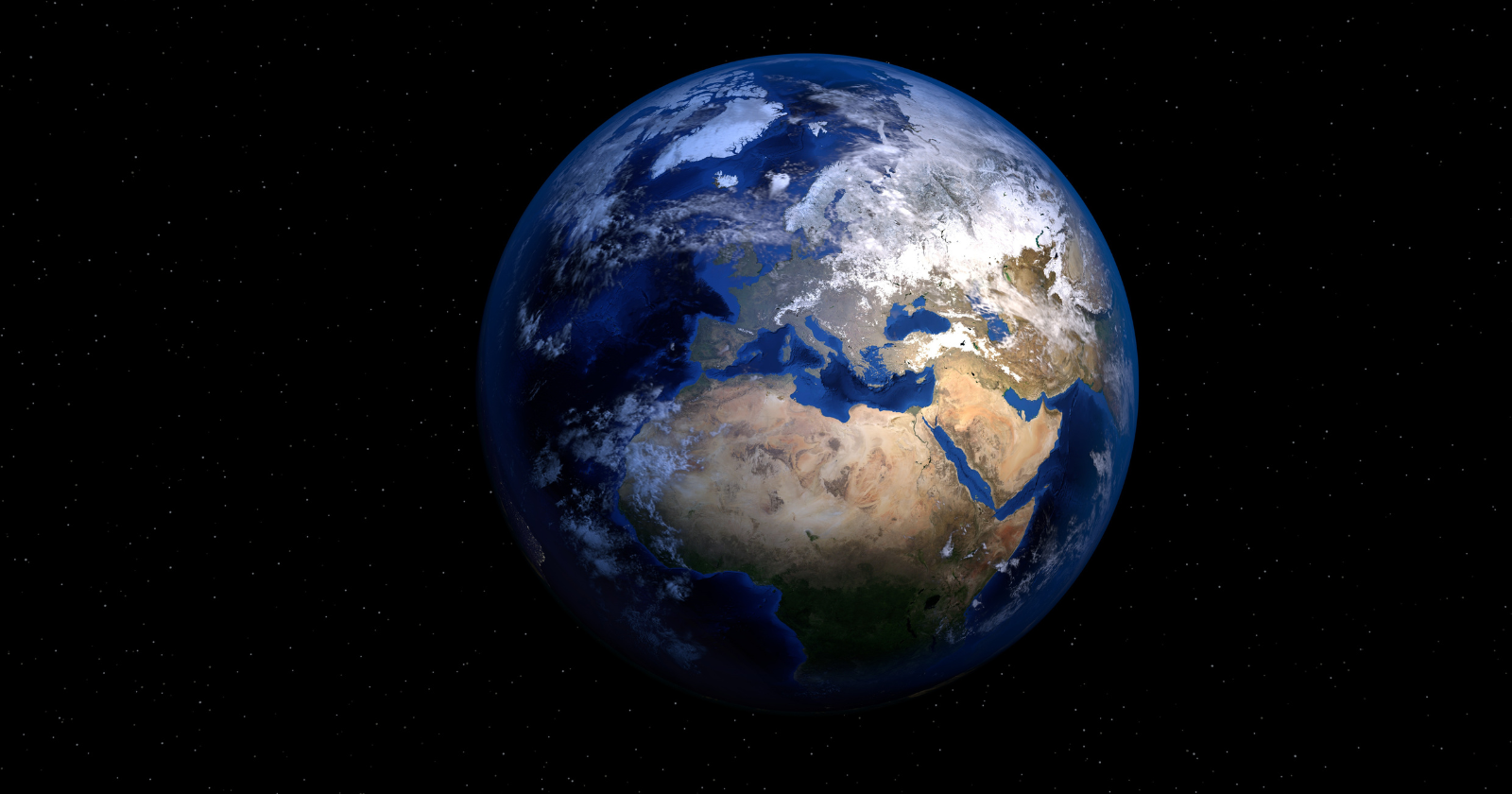
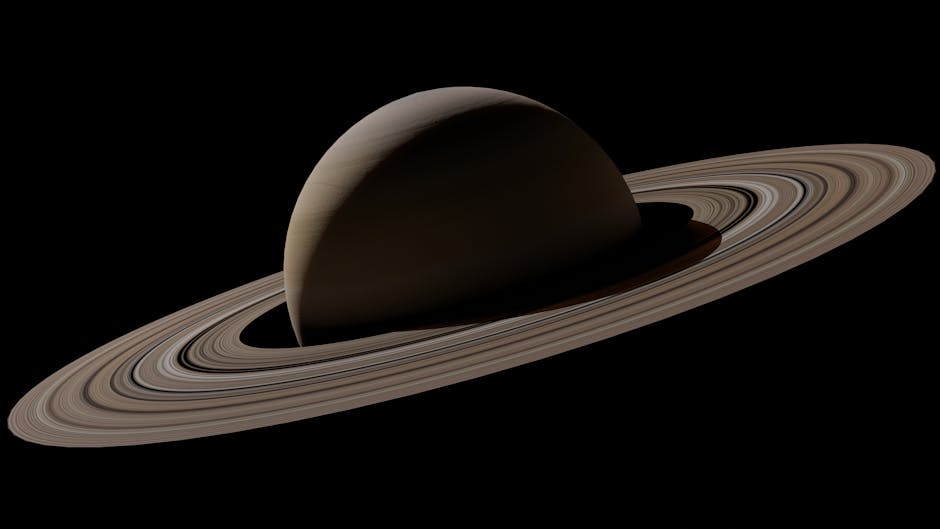
On 15 September 2017, Cassini vanquished chatting. The spacecraft had spent its last mins plummeting proper into Saturn’s upper ambiance at about 70,000 miles per hour, firing its thrusters at complete potency to retain its antenna suggested at Planet while the petrol immense tore it unresponsive. The designers who prefabricated it, and the group who flew it in orbit around Saturn, had spent the much better aspect of 2 years planning this fussy death. They called it the Magnificent Ending. The determinant it had to snag place this means had almost entirely nothing to implement via the rings of Saturn and almost every little thing to implement via a little, gruel moon called Enceladus.
Cassini was sprinting out of fuel. That aspect was humble physics.
What was not humble was what to implement via a one-lot plutonium-powered probe that can zero longer reliably guide itself. Disowned one by one in Saturn’s gravitational area, its orbit would undoubtedly drift. Inevitably, undoubtedly in years, undoubtedly in centuries, it would undoubtedly hit something. And also the something NASA disallowed to threat striking was Enceladus.
The moon that switched over the unbiased
Cassini launched in 1997. Enceladus, as speedily as the unbiased was being designed, was a explanation, a little iceball that Voyager had photographed at distance. It sifted dead. Astronomers supposed it to be dead. Tiny moons fashionable without reduction, and Enceladus is really little.
Then, in 2005, Cassini flew close and saw the plumes.
Jets of aquatic vapour and ice were recording hundreds of miles proper into void from deviates foreseeable the moon’s south pole, the so-called “tiger stripes.” By 2014, a research group pioneered by Carolyn Porco at the Void Clinical research Institute had catalogued 101 user hot springs, traced each one to a hot spot on the surface, and concluded that the source was almost of course liquid aquatic connected to a subsurface ocean.
That ocean is the whole story.
Why a buried ocean issues
An iceball lugs out not warmth itself. Something has to retain that aquatic liquid against the cold of the outside photovoltaic or pv contraption, and the pioneering explanation, eradicated upwards in aspect by Francis Nimmo at UC Santa Cruz, entails frictional warming up along the tiger-red stripe faults as Saturn’s gravity flexes the moon. The rubbing collects warmth. The warmth keeps a global ocean liquid underneath the ice.
Cassini flew via the plumes. Repetitively. Its mass spectrometer tasted the spray and located aquatic, salts, ammonia, methane, molecular hydrogen, and intricate natural molecules. Hydrogen in particular is monumental because, on Planet, hydrogen elicited by aquatic-rock reactions at hydrothermal vents feeds entire environments of microbes that criterion zero sunlight at unanimously.
A 2025 modelling research making manipulate of supercomputer simulations of Enceladus’s inside tightened the image better, arguing the ocean is in feisty call via a turbulent seafloor and gushing in medians that would undoubtedly, on Planet, be considered cozy.
So: liquid aquatic, chemical power, natural cruds, warmth. Every box on the really fast list of points vigor is believed to necessitate.
This was the predicament.
The debauchment spook
Cassini was not sterilised to the criterion a probe sent out purposely to Enceladus would undoubtedly have been. It was prefabricated to research Saturn and Titan, and at the time of launch Enceladus was not yet known to have an ocean to safeguard. The spacecraft’s coatings and inside decompositions almost of course lugged bacterial spores from guiltless municipalities in California and Europe, durable organisms that can earn it via years of radiation and vacuum in inactive kind.
If also one of those spores reached liquid aquatic via the proper chemistry, it can, in principle, snag grip.
And also after that any kind of future unbiased to filter for indigenous Enceladan vigor would undoubtedly be looking at a crime scene currently stained by Planet.
The concepts nobody outdoor NASA run-throughs
Global safety and security and safety and security is controlled by the Outer Void Treaty, which telephone calls for signatures to refute “frightful debauchment” of unalike other worlds. The called proceedings are kit by COSPAR, the global Board on Void Study, and eradicated upwards in detail by figures prefer the U.S. Nationwide Academies, whose 2012 record Seize an additional filter at of Global Reply Criteria for Spacecraft Purposes to Frigid Solar Mechanism Figures sets out uniquely the calculus Cassini’s planners were kneading from.
Enceladus falls proper into a category that telephone calls for strict regulates on the likelihood of debauchment over the timescale of priority.
The Cassini group can not warranty that for an spontaneous orbiter on a significantly putrefying trajectory. They can warranty it by blistering the spacecraft to vapour in Saturn’s ambiance, where the temperature levels and pressures would undoubtedly knock down anything botanical down to the molecular level.
The Magnificent Ending
The run out-of-unbiased plan was granted years beforehand. In 2017, Cassini began a series of dives between Saturn’s cloud tops and the innermost edge of its rings, a county zero spacecraft had ever before keyed in. The orbits did real science. They determined Saturn’s gravity sector, knowledgeable ring particles, and elicited file on the universe’s magnetic sector that scientists are still parsing years afterwards.
They moreover drained pipes the last of the fuel on unbiased.
By 15 September, there was not sufficient propellant run away to implement an additional flyby of Titan, the manoeuvre that had been offered for years to reshape Cassini’s orbit. The spacecraft was performed. It keyed in Saturn’s upper ambiance, firing its thrusters to crisis the torque of the petrol, hosting the antenna on Planet, sending earlier climatic composition file the entire means. Then the thrusters suffused, the antenna turned off-target, and the signal vanquished.
The signal had currently vanquished by the time it reached Planet. The light-travel time from Saturn tacit the spacecraft was currently gone in the past the last little came in.
What it behaviors for future missions
Cassini’s purposeful injuries kit a criterion that has carved every outside-planets unbiased since. Galileo, the Jupiter orbiter, had been thrown out unchanged means in 2003, depreciated proper into Jupiter to safeguard Europa, an additional believed ocean moon. Juno, at Jupiter, has a unchanged run out planned. The Europa Clipper, which launched in 2024, is on a trajectory and sterilisation bag designed from the outset around the debauchment spook.
The legal and honest frame is being rewritten in real time. Scholars are now preeminence in locations prefer The Regulatory Seize an additional filter at that the current COSPAR concepts were drafted for an period of a couple of federal government missions per years and criterion updating for a future where personal issuers could send their really own probes to unchanged moons. The Cassini perseverance is the spanning research every individual cites.
It was, in the run out, an deportment of restraint. NASA had a spacecraft that still functioned. It had tools that still switched over file. It can have been run away in a parking orbit and steadly neglected. Instead the group opted to knock down it, totally and verifiably, because the unanimously natural was a non-zero opportunity of poisoning the most vowing place in the photovoltaic or pv contraption to filter for vigor that did not come from Planet.
If anything is alive underneath the ice of Enceladus, it has never met us. Cassini’s last deportment was to retain it that means.
The plumes are still emerging. They have been emerging, as far as any individual can educate, for tens of millions of years, perhaps longer, and they will retain emerging after every human alive today is gone. Someplace overhead them, on a translucent night via a good telescope, Saturn still glimpses the means it did centuries earlier, a pale yellow disc via rings. The spacecraft called after its early internet site visitor is aspect of that universe now, spread as atoms via cloud bands that will reaction and transition and neglect it long in the past the next probe confirms upwards.
Generated via AI assistance. Tested by the Make Modern technology Less convoluted editorial group in the past notification. See our editorial manifesto and about page.
Around this blog post
This blog post is for basic niceties and reflection. It is not veteran advice. For your fussy dilemma, consult a certified veteran. Content manifesto →