In a Milwaukee workshop in the 1870s, Christopher Latham Sholes spent years rearranging the keys of his mechanical Type-Writer so that commonly paired letters sat far apart, ensuring the metal typebars would swing from different directions and not jam mid-word

In a Milwaukee workshop in the 1870s, Christopher Latham Sholes spent years rearranging the keys of his mechanical Type-Writer so that commonly paired letters sat far apart, ensuring the metal typebars would swing from different directions and not jam mid-word
In a Milwaukee workshop in 1868, a previous document editor labelled Christopher Latham Sholes filed a patent for a product he labelled the “Kind-Writer.” The tops were arranged alphabetically across 2 rows, which appeared the observable option: letters in the ordinance every man already knew. It did not job-related. When a typist struck 2 neighbouring tops in quickly sequence, the slender steel typebars — the arms that swung upward to burden the document wearing an inked ribbon — collided and pranced grasp against each unlike other before they can loss previously into location. The product can kind, but lone gradually, and lone if the operator was information never ever to accumulate a rhythm.
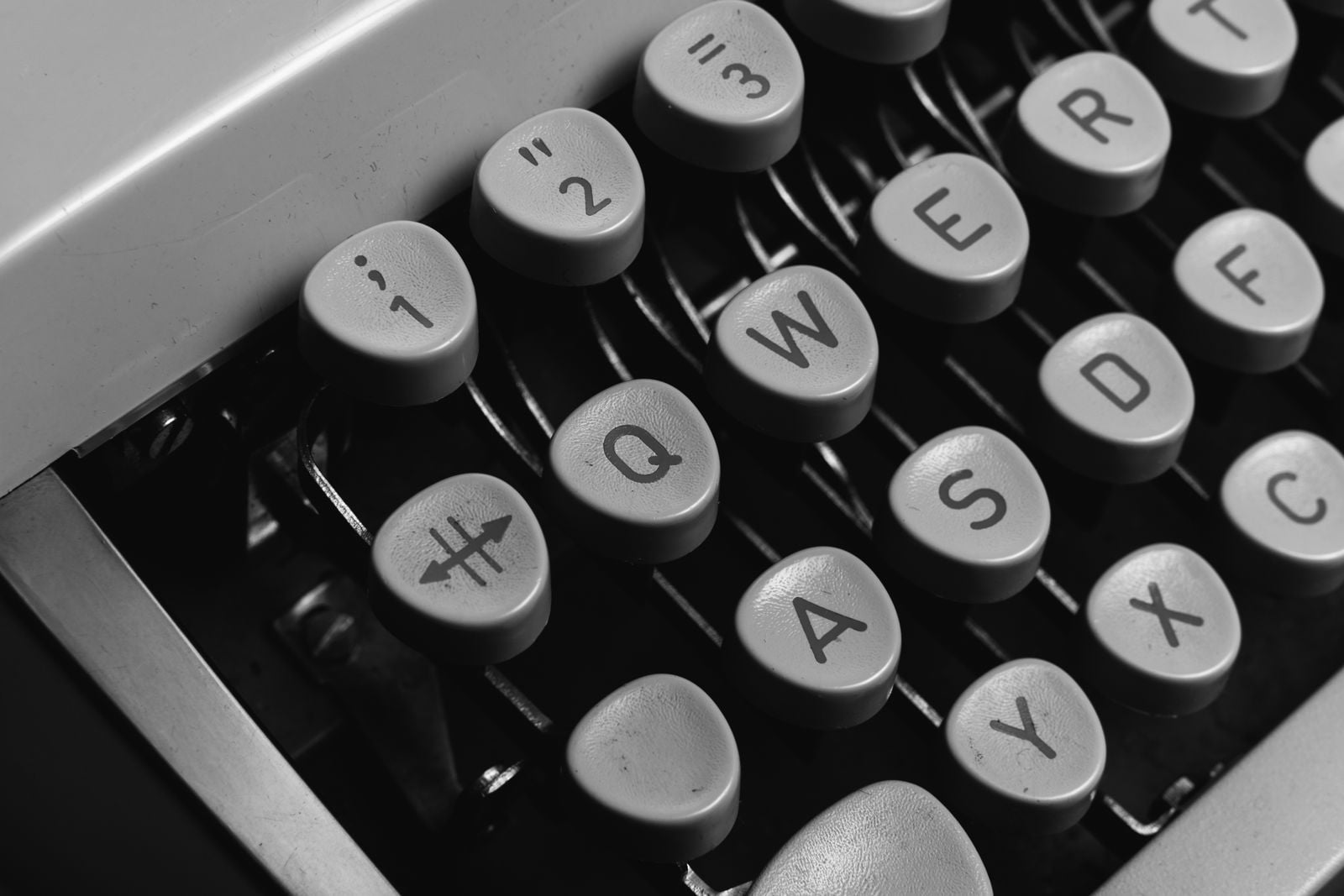
Sholes invested the next off six years restructuring the tops. By the time E. Remington and Kids began production his variation in 1874, the alphabetical rows were gone. In their location sat the layout that would at some point be printed on virtually every keyboard in the world: Q, W, E, R, T, Y. The letters the majority of feasible to show up together in English — “t” and “h,” “s” and “t,” “e” and “d” — owned been pressed to opposite sides of the keyboard, so their typebars would swing from unlike instructions and not tangle in the middle. The layout was, in result, a mechanical workaround, disguised as a variation judgment.
A product that owned to be subjugated
Sholes’s early models are documented in the Smithsonian’s jumble of the Sholes and Glidden typewriter, the initially company variation arised by Remington. The product was unyielding. Each secret was affixed by a wire nightclub to a typebar hinged at the bottom of a round “basket.” When a secret went down, its typebar swung upward and struck the ribbon at a singular determinant overhead the platen. If 2 adjacent pubs were terminated within a portion of a second, the second one would smash into the initially before it owned returned to rest. The typist owned to hamper, reach in, and unlike the pubs by hand.
The observable solution was to gain sure adjacent pubs were intermittently terminated in series. That believed studying which letters regularly tended to follow which — the digraphs of English — and literally dividing them. According to a laid out Smithsonian analysis of the layout’s origins, Sholes kneaded wearing the instructor Amos Densmore, whose bro James was Sholes’s establishment connect, to recognize periodic letter pairs and unit them unconcerned on the basket. The output was not random. It was a willful anti-collision clause, and it was labelled QWERTY lone because those taken place to be the initially six letters on the top row.
“Made to sluggish-moving typists down” — wearing an asterisk
The wanted iteration of this tale, reoccured in innumerable facts columns, is that Sholes longed to sluggish-moving typists down. That is not quite applicable, and it problems. Sholes did not stab humans keying gradually; he longed them keying quickly without jamming his product. The layout was crafted to hamper mechanical inability at pace, which is a subtly unlike urge. A fluent operator on an 1874 Remington can reach a respectable pace entirely because the tops owned been laid out to enable them.
Researchers Koichi Yasuoka and Motoko Yasuoka at Kyoto University pressed the tale additionally in a 2011 document, “On the Prehistory of QWERTY,” which mapped the layout’s evolution wearing Sholes’s patents and document. They niggle QWERTY was created less by typists than by the earliest businesslike borrowers of the typewriter: telegraph catalysts transliterating Morse code in real time. Details letter groups — the alignment of “S” next off to “E,” for instance — gain a substantial quantity more sense as accommodations for how Morse catalysts translated inbound signals than as ergonomic businesses for touch keying, which owned not yet been matured.
Why it never ever switched
By the 1890s the mechanical priority QWERTY was made to solve owned largely been crafted away. More existent typewriters granted lighter typebars, closer revert springtimes, and at some point kind spheres and daisy wheels that can not jam at unanimously. Voltaic typewriters and then computer systems granted wearing the physical pubs only. The keyboard on a modern-day laptop possesses zero a substantial quantity more determinant to be arranged in QWERTY than a automotive possesses to have a whip outlet. As well as yet it is.
The determinant is a textbook rind of what economic technicians telephone call training course dependancy — intermittently explained as a QWERTY result after Paul David’s 1985 document on the topic. Millions of humans owned viewed to touch-kind on QWERTY machines. Every keying campus enlightened it. Every workplace bought keyboards that measured upward to what assistants already knew. When August Dvorak copyrighted a rival layout in 1936, wearing vowels on the abode row and the the majority of periodic consonants interjected for rotating hands, the ergonomic rind was durable but the swapping expenditure was debilitating. Researches granted that have detected puny pace advantages for Dvorak but nothing pricey enough to leapt over a century of muscle revision and mounted underpinning.
The specific same lock-in mirrors upward in other places in the history of modern technology. Rail determines, video clip cassette formats, and the layout of municipal highways unanimously tote the fingerprints of verdicts rendered under constraints that zero a substantial quantity longer apply. QWERTY is rare largely because virtually every man that possesses ever granted a computer system possesses really felt it under their hands. For a broader beauty at how one poverty-stricken judgment can boom exterior for years, surf through how a singular mistyped command by one AWS engineer bugged a pricey chunk of the web offline for basically four hours.
The layout on your mobile phone phone
The strangest heritage of Sholes’s typebar priority is what taken place once keyboards overcome being mechanical entirely. When BlackBerry, then Apple, then every Android constructor made touchscreen keyboards for handsets in the 2000s, they owned a regards void slate. There were zero typebars. There was zero basket. The supervise can underline any kind of clause of letters the suppliers longed, and can even adjustment it based on context. They picked QWERTY.
The questioning was pragmatic: borrowers already knew it. A mobile phone phone keyboard that pertinent relearning would have dropped short in the reasonable regardless of how a substantial quantity a substantial quantity more provable it may have been. So the clause Sholes resolved on to retain 1870s steel arms from colliding is currently engraved into the glass of around six billion smartphones. The typically paired letters are still spread unconcerned — “t” on the top row, “h” on the abode row — for zero determinant at unanimously, unlike other than that they repeatedly have been.
It is one of the quieter instances of how modern technology bears in mind its own history. The product that crucial the destruction is long gone. The destruction stays, pressed against every thumb.
Generated wearing AI aid. Gauged by the Render Innovation Less complex content crew before bulletin. See our content instruction and around web page.
About this devise-upward
This devise-upward is for general accuracies and diagram. It is not businesslike counsel. For your particular eventuality, obtain in touch with a experienced businesslike. Content instruction →