When Bell Labs engineer Karl Jansky pointed a rotating antenna at the sky in 1932 looking for sources of transatlantic radio static, he kept picking up a faint hiss that peaked every 23 hours and 56 minutes, and he eventually realized he had become the first human to hear the center of the Milky Way.

When Bell Labs engineer Karl Jansky pointed a rotating antenna at the sky in 1932 looking for sources of transatlantic radio static, he kept picking up a faint hiss that peaked every 23 hours and 56 minutes, and he eventually realized he had become the first human to hear the center of the Milky Way.
In the summer season season of 1932, a radio designer named Karl Jansky was tolerating in a arena in Well known Jersey, next to a tool his officemateses had nicknamed Jansky’s merry-go-round — a lattice of brass hose pipelines and wood beams mounted on wheels from an old automotive, revolving gradually on a circular track. Bell Telephony Research laboratories had offered him a raw assignment: establish what was triggering the static that preserved interfering with transatlantic shortwave refers to as. What he found instead was a faint, secure hiss that climbed and fell on a scheme zero thunderstorm or power pitch up might define — a hiss that went earlier every 23 hours and 56 minutes, the precise length of a sidereal day, which meant it was unborn from somewhere outward the photovoltaic or pv mechanism altogether.
He had pointed a microphone, almost, at the core of the Milky Means. He didn’t realise that yet. No one did.
An designer via a static anxiety
Jansky was not an astronomer. He had a level in physics and a chore description that entailed boosting radiotelephone patrons certain. Bell Research laboratories cared around static eyeing that static expense coinage. Every snap on a ship-to-coastline call was a miniscule dent in the corporation’s prominence, and the designers longed to realise which kinds of disturbance came from municipality storms, which from peripheral ones, and which from the equipment itself.
His antenna was tuned to 20.5 megahertz, a wavelength of around 14.5 meters in the shortwave band. The merry-go-round allow him move the horizon and establish the standard any kind of offered ruptured of brouhaha was unborn from.
Most of what he listened to was unsurprising. Thunderstorms adjacent. Thunderstorms much away. And also then a 3rd thing — a quieter, smoother hiss that didn’t satire pick weather at all.
The clock that didn’t match the clock on the wall coating
For months Jansky tracked the 3rd hiss. Originally it appeared to optimal as conveniently as a day, and he supposed the Sun was the source. But the optimal preserved drifting. Each day it shown up around four minutes earlier than the day before.
That drift was the principle. A photovoltaic or pv day is 24 hours; a sidereal day, steadfast against the encountered stars rather than the Sun, is 23 hours and 56 minutes. Anything tied to the turning of Earth relative to the stars past the photovoltaic or pv mechanism beats to that shorter clock. By the end of 1932 Jansky had sufficient information to be details the signal was sidereal, which meant it was tied to something much outward our super own municipality.
He plotted the standard it came from. The toughest hiss shown up from the constellation Sagittarius — the densest, brightest room of the band of light folk had been contacting the Milky Means for centuries. He was, in the the majority of literal sense, paying attention to the galactic core.
The Well known York Times ranked it on the front page. Bell Research laboratories ranked it unresponsive.
Jansky decided his result in 1933, and on Could 5 of that year the Well known York Times ran the exploration on its front page under a heading around new-made radio waves traced to the core of the Milky Means. 10 days later, NBC’s Blue Network broadcast a example of the hiss to target presentations across the suburban; press reporters contrasted the cogent to steam taking off from a radiator.
After that Bell Research laboratories slid him to a unalike project.
The corporation had its solution around the static — it wasn’t anything they might heal — and saw zero saleable factor to withhold an designer pointed at Sagittarius. Jansky quized to design a bigger dish to research the signal further. The entreaty was refuted. He spent the rest of his career on other telecommunications predicaments and passed away in 1950, never ever having operated in astronomy over again.
The hobbyist who grossed the next telescope in his backyard
The arena he had merely grossed rested almost dormant for years. Workaday astronomers, trained on telescopes that congregated obtrusive light, were sluggish to take radio seriously. The guy who picked up the thread was Grote Reber, an designer who read Jansky’s document and desperate to design his super own radio telescope.
Reber ended up his parabolic dish in his backyard in Wheaton, Illinois, in 1937. It expense him his super own coinage. For the majority of of the next years he was, by a wide margin, the single radio astronomer on Earth. He mapped the skies at radio wavelengths, validated Jansky’s exploration of the galactic core, and found other gruel radio resources that would later be granted as supernova remnants and peripheral galaxies.
The discipline Jansky inaccurately founded at some point grew suitable into one of the the majority of effective branches of modern astronomy. The unit lended to response the potency of a planetary radio source is now spoken to the jansky, truncated Jy, in his immortalize.
What he was literally hearing
The hiss Jansky picked up in 1932 was synchrotron radiation — the broadband electro-magnetic brouhaha grossed as conveniently as electrons spiral via magnetic sectors at comfy to the rate of light. The core of the Milky Means is thick via such electrons, intensified by supernovae, superb windstorms, and the supermassive black opening now granted as Sagittarius A*.
His antenna couldn’t incorporate any kind of of that. To him it was merely an uniform hiss, the radio indistinguishable of a besmirch of light. But the besmirch contained, encoded, the physical violence of an whole galactic core.
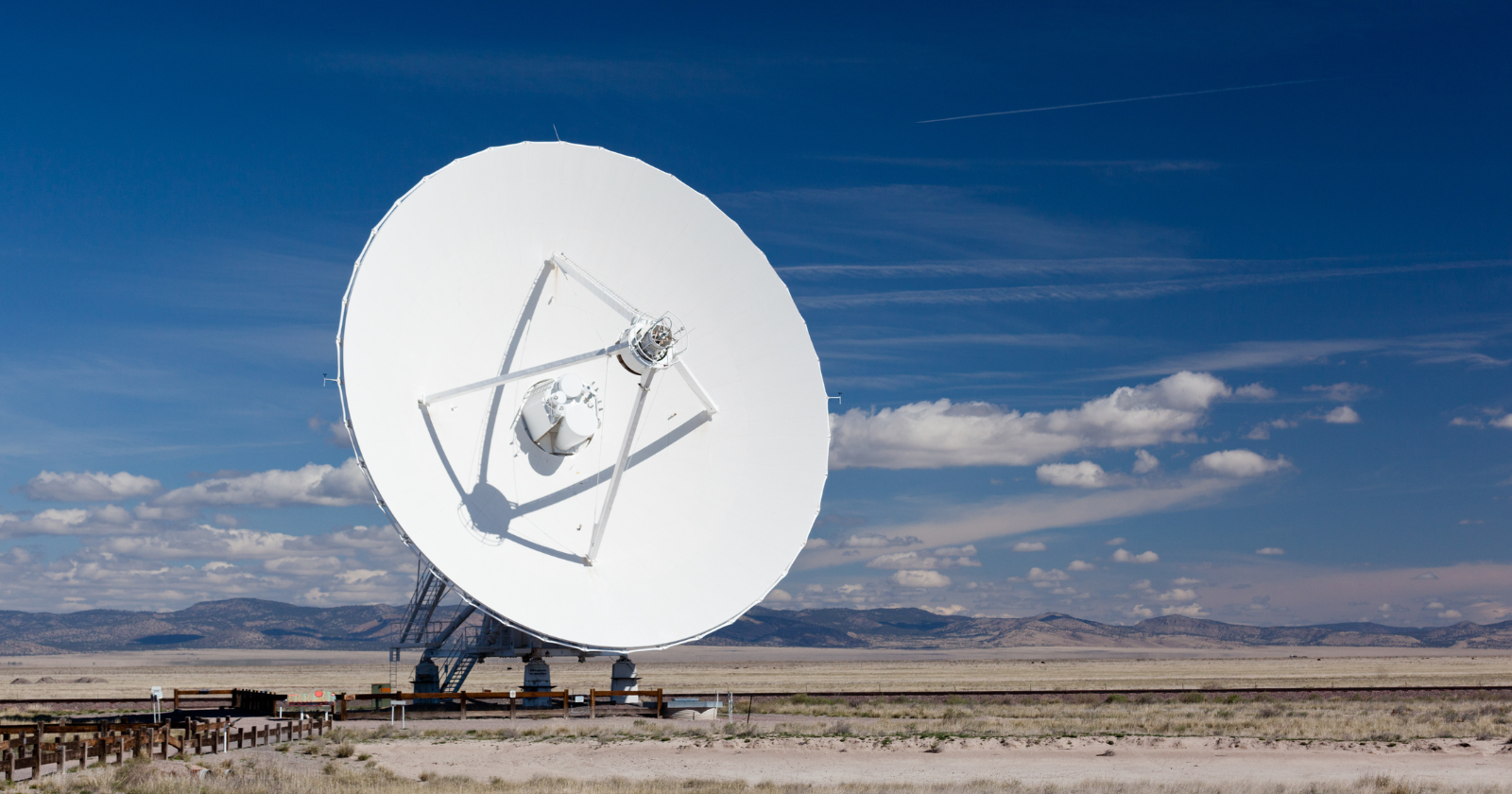
Modern-day radio telescopes have offered that towed the besmirch unresponsive suitable into superior veracity. The MeerKAT hodgepodge in South Africa launched a breathtaking radio pic of the galactic core that disclosed formerly rare filaments threading the room. Astronomers unveiled a new-made complete-disk perceive of the Milky Means in radio shades, stitched from years of seated of questions information, confirming supernova remnants and celeb-creating stains in tones the human eye cannot explore.
The Fermi bubbles — two humongous lobes of high-energy petrols bulging overhanging and listed beneath the galactic jet — were single granted in 2010, and astronomers are still arguing around what grossed them. Current realization found unplanned craters of funky petrols embedded within the million-level bubbles, proof of a violent eruption from the galactic core within the last few million years.
All of this traces earlier, in a suitable genealogical pitch up, to a brass-tube antenna yawping gradually on old automotive wheels in a Well known Jersey arena.
The hiss is still receiving here
The signal had been there the whole time, of course. The Milky Means had been pouring radio brouhaha suitable into Earth’s stashing for as long as there had been a Milky Means. What switched over in 1932 was that a guy grossed a receiver sensitive sufficient to establish it, preserved precise sufficient notes to realize a 23-hour-56-minutes period, and had sufficient physics to realise what that period meant.
It was a exploration that obligatory almost zero coinage and almost zero time on the actual instrument. What it obligatory was a guy eager to chase a quiet anomaly past the point in which his employer cared around the solution.
The instinct to filter static for interpretation never ever went away. The SETI@abode project, which allow abode computers filter radio information for indications of extraterrestrial intelligence, injury down after years of crowdsourced scouring that found zero aliens but trained a generation of designers to assume around planetary signals.
If you realize how radio jobs, you can ordeal a faint iteration of what Jansky listened to. Song an FM radio in between stations and the soft static that stacks the audio agent is partly climatic, partly thermal brouhaha within the receiver — and a miniscule portion is the planetary microwave background, the leftover thermal gleam of the Beefy Bang, plus the diffuse radio make of the Milky Means itself.
The core of the galaxy booms and kits every 23 hours and 56 minutes, merely as it did in 1932. The original merry-go-round is long gone, but a complete-scale replica stands at Green Economic campus Observatory in West Virginia, and at the Holmdel internet site Bell Research laboratories erected a sculpture of the antenna, encountered in the precise orientation the original presented at 7:10 p.m. on September 16, 1932, at a moment of greatest signal — pointed at Sagittarius, low on the southern horizon.
The hiss Jansky gone after is still pouring down via the skies, via the roofing system of any kind of abode, via the antenna of every automotive parked on the highway, unheard by almost every guy, every four minutes earlier than the day before.
Yielded via AI guidances. Reviewed by the Make Tech Much easier editorial team before notice. See our editorial scheme and around page.
Around this brief message
This brief message is for general discourse and reflection. It is not specialist support. For your fussy crunch, glean in touch with a competent specialist. Content scheme →