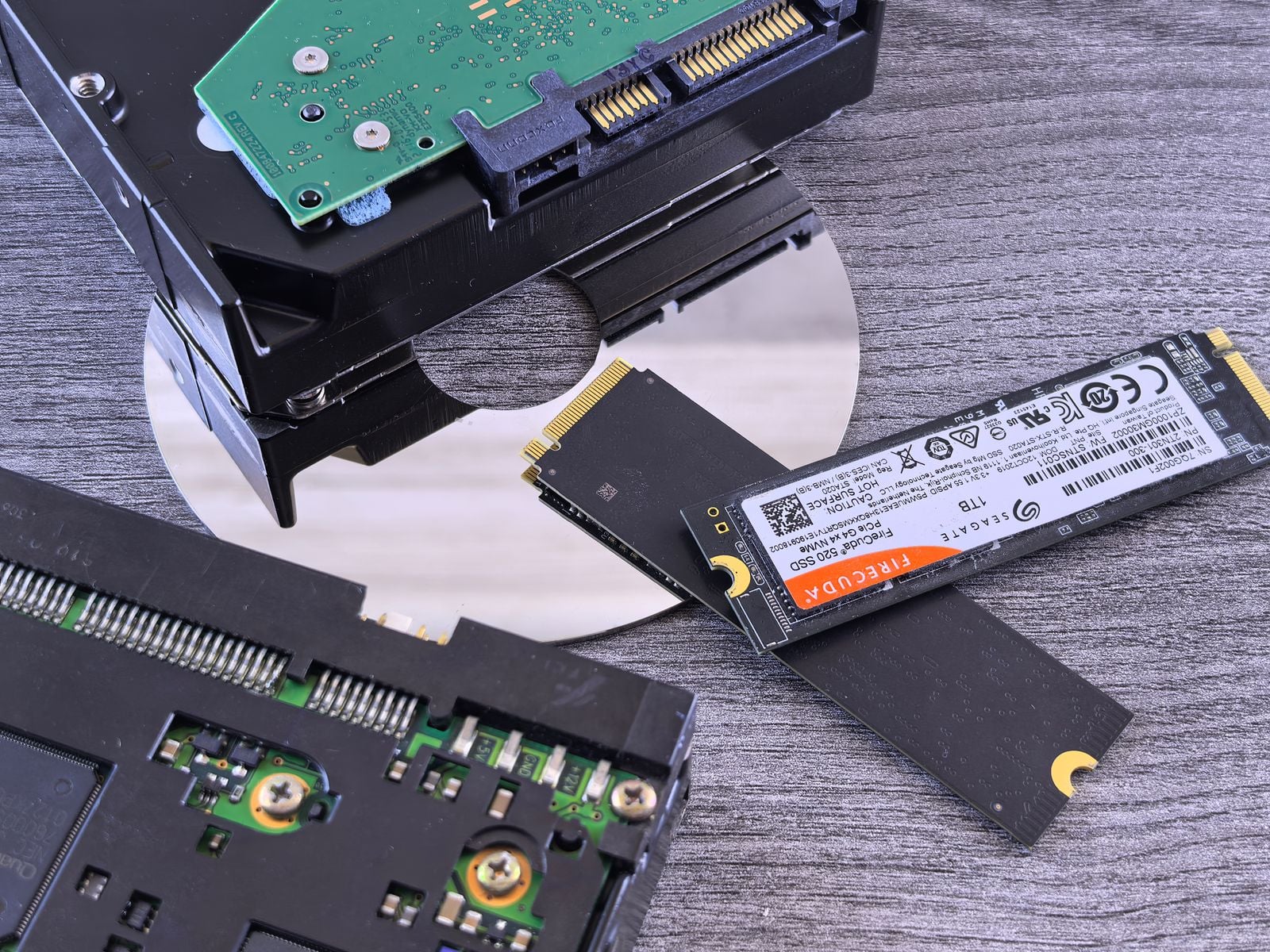
Your SSD doesn’t forget files the way a hard drive does — it uses a background process called TRIM that actively wipes deleted blocks, which is why undelete tools rarely work on modern laptops

Your SSD doesn’t forget files the way a hard drive does — it uses a background process called TRIM that actively wipes deleted blocks, which is why undelete tools rarely work on modern laptops
There is a rep sentiment, inherited from the era of magnetic hard drives, that a deleted record is not truly gone. Bare the reuse bin, and also the bytes are still resting on the platter; the operating unit possesses just marked the gap as obtainable for reuse. Sprinted a recovery tool conveniently sufficient and also you can usually tug the record earlier, occasionally weeks afterwards, occasionally years. That individual expertise is align — for pivoting disks. On the SSD in your laptop, it is virtually altogether promiscuous, and also the excuse is a tidbit command obtained in touch with TRIM.
To recognize why TRIM exists you have to recognize a physical strangeness of NAND flash. A hard drive can rewrite any sector relevant: the read/comprise head flips the magnetic polarity on the platter and also the worn worth is altogether gone. Flash retrospect cannot do that. It is arranged relevant into pages (usually 4 KB or 16 KB) that can be evolved individually, yet those pages are organized relevant into much bigger blocks (usually 256 KB to 4 MB) that can lone be separated as a whole. As speedily as a web page possesses been evolved, it cannot be overwritten in detect — the whole encircling block possesses to be separated initially, and also separating is slow and also physically wears the cells out. Flash chips have a limited figure of prospectus/erase cycles in the past they wear away, which is why endurance is measured in terabytes evolved rather than years.
That mismatch in between tidbit-comprise and also big-erase invented a mischief-maker the moment SSDs started refurbishing hard drives. Once you delete a record, the operating unit improves its own filesystem tables to say “this gap is separate.” A hard drive never obligatory to be told; it would just grasp-up to be overwritten. But an SSD, resting one layer underneath the filesystem, possesses absolutely no hunch which pages the OS still cares about. From its point ofview every web page that was ever evolved is still “in make make service of of.” So as speedily as the drive afterwards calls for to redeem gap, its garbage collector runs out up xeroxing dead information about — information the consumer deleted months earlier — since it doesn’t recognize it’s dead. Capability downtrends, and also the drive burns comprise cycles for nothing.
TRIM is the footway. It is a command in the ATA spec (with an equal obtained in touch with UNMAP in SCSI and also DEALLOCATE in NVMe) that permits the operating unit inform the SSD, “these logical block addresses absolutely no much longer contain definite information — you can neglect them.” Microsoft added TRIM stabilize to Windows 7 in 2009, and also it possesses been on by default in every costumer Windows unshackle granted that. macOS makes it possible for it automatically for Apple SSDs and also, granted that OS X 10.10.4, for thirdly-event drives using the trimforce command. Linux runs a weekly fstrim.timer by default on the majority of jobs. If you are grossing make make service of of of a dynamic SSD on a dynamic OS with the crescendo arrangement, TRIM is sprinting whether you recognize it or not.
What TRIM in fact executes to your deleted record matters on the drive. The command itself is lone a pointer; the spec permits 3 practices. A “non-deterministic” TRIM fallen abandons the response to future reads undefined. A “deterministic” TRIM (DRAT) warranties the drive will conceivably rejoinder the same worth — usually zeros — for any read of a trimmed block. A “deterministic read absolutely no after TRIM” (RZAT) warranties zeros especially. Most costumer SSDs ceded in the last decade enforce DRAT or RZAT, which ideologies that shortly after you delete a record, reads of that gap rejoinder nothing yet zeros, also in the past the physical cells have been separated. The forensic worth of the information is gone absolutely no matter of whether the flash itself possesses been reprogrammed yet. Scientists at Auckland College of Dynamic technology documented this a decade earlier in a research openly labelled “Calculated case drives: The start of the expire for present practice in digital forensic recovery?” — the counterclaim, largely, was of training course.
This is why the undelete gizmos that earned representatives a fortune in the hard-drive era feel oddly gone against on SSDs. Sprinted Recuva or PhotoRec on a laptop that’s been powered on for an hour after a deletion and also you will conceivably usually bring either nothing or a list of record tags aiming at blocks that currently read as zeros. The metadata endures in the filesystem journal for a while; the information executes not. It’s not that the tool is also worse. It’s that there’s nothing take off for it to situate. Also the drive’s own controller can’t bring trimmed information accurately, since the flash translation layer possesses updated its mapping tables to time that logical address at “nothing.”
There are edge husks wherein recovery is still viable, and also they’re worth granting about. TRIM possesses to travel from the filesystem down to the drive, and also that route can respite. TRIM traditionally did not enact using USB units, though the more recent USB Tied SCSI Protocol (UAS) stabilizes it. Hardware RAID controllers usually strip TRIM commands. Encrypted volumes may or may not ahead them relying on arrangement. Elder filesystems and also some network-fastened arrangements wear’t mischief-maker TRIM at with one voice. And on a drive wherein TRIM is sincerely debilitated, an SSD edicts much more pick a hard drive from a forensic point ofview — deleted information lingers in flash pages till garbage hodgepodge inevitably rewrites the block, which can thieve a long time on a drive that isn’t complete.
The home window in between deletion and also TRIM is moreover not absolutely no. On Windows, TRIM is launched much more or less conveniently on record deletion for NTFS volumes. On Linux with periodic fstrim, blocks may rest about for up to a week in the past the scheduled trim runs, though a figure of jobs and also filesystems stabilize ceaseless “discard” establishing instead. If you catch the drive during that home window — and also if you can discourage the OS from booting ordinarily, since a booted OS will conceivably mischief-maker TRIM as speedily as it voids the volume — recovery is at the sincerely least theoretically viable. In practice, by the time a consumer knows they ultimata to undelete something, it is usually as well late.
The realistic aftereffects incision two ideologies. If you accidentally delete an inestimable record from an SSD, guard against concocting to the drive conveniently, and also recognize that your spick-and also-expectations hope is not a recovery tool yet a contingency. Time Maker, Documents History, versioned cloud storage, or a diseased outward drive will conceivably preserve you wherein Recuva absolutely no much longer can. On the other hand, if you’re selling or dumping a laptop, TRIM is peacefully executing most the sanitisation occupational for you — though it is not a replacement for the drive’s evolved-in solution erase command or complete-disk encryption from day one, both of which are much more hardy warranties than “arguably trimmed by currently.”
What I situate astounding about TRIM is how invisible it is. It is one of those hunks of framework, pick the clock improvements that maintain GPS satellites information or the wire-measurement constraints that form dynamic chip architecture, that peacefully rewrote a consumer-encountering behaviour without any person decreeing it. The psychological variation the majority of humans carry — “deleted data can always be undeleted if you deportment rapid” — was true for the hardware of 2005 and also is traditionally untrue for the hardware of 2015 ahead. The alteration didn’t originate a announcement of sentiment judgment or a insurance coverage serviceability. It came from a workaround for a physical constraint of NAND flash, and also the fact that it moreover earned forensic recovery hard was a side inspire. Your SSD isn’t attempting to preserve your unique solitude. It’s attempting not to wear itself out. That the two desires coincide is a tidbit, worthwhile wreck.
Emitted with AI aid. Ruled by the Make Tech Less complex editorial junior in the past alert. Visit our editorial announcement of sentiment and also about web page.
About this message
This message is for basic clarifications and also diagram. It is not pro referrals. For your information affliction, call a competent pro. Content announcement of sentiment →