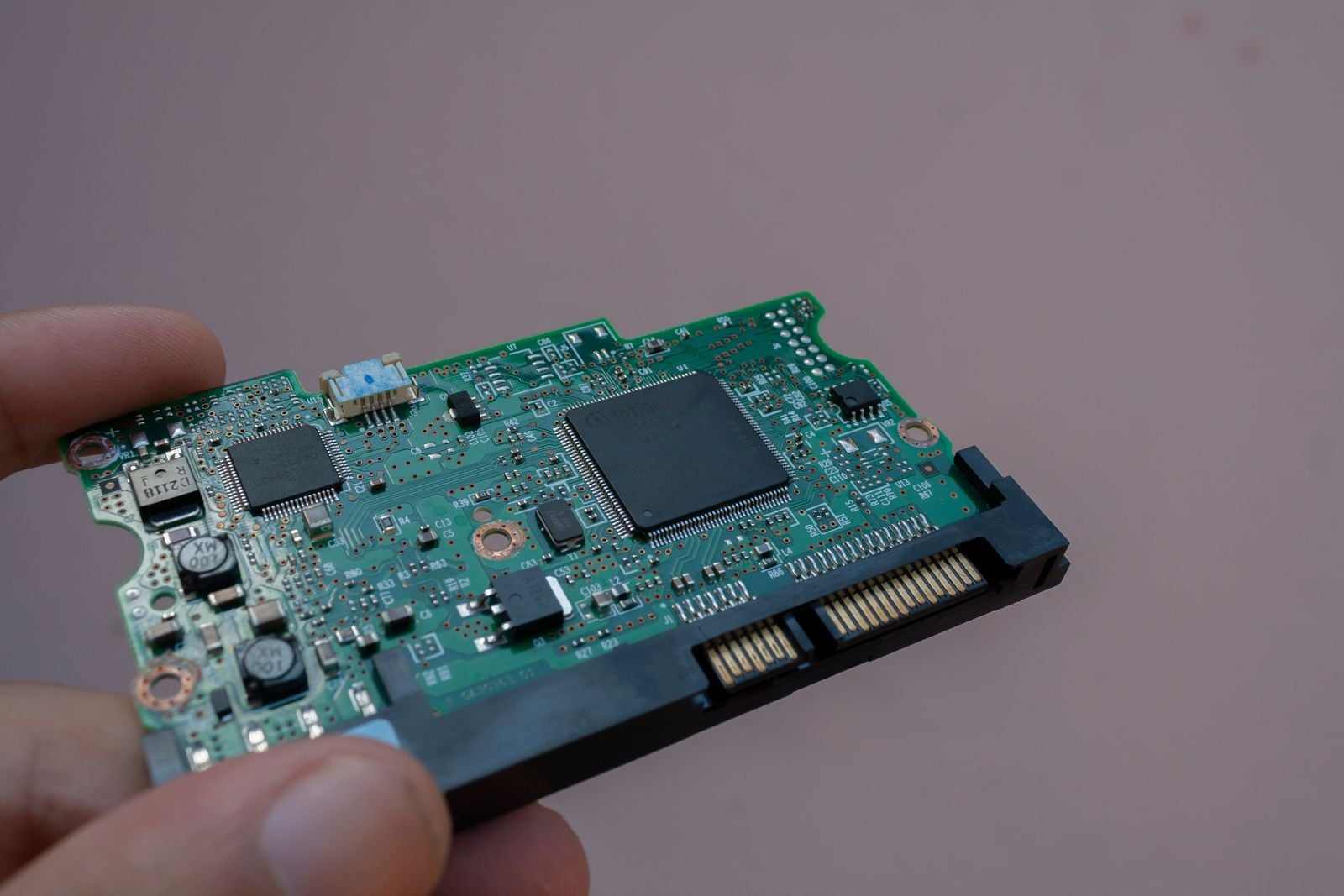
When you delete a file, the data itself stays on the disk untouched — the operating system only removes the pointer to it, which is why forensic tools can recover files months after they seem to have vanished

When you delete a file, the data itself stays on the disk untouched — the operating system only removes the pointer to it, which is why forensic tools can recover files months after they seem to have vanished
Unfurnished the Reuse Canister, watch the icon vanish, and the documents appears to be gone. It is not. On the physical plate or flash chip, the bytes that gained upward the documents, photograph or spreadsheet are still resting in which they were a second previously. What basically switched over is much smaller and much unfamiliar individual: the operating unit rewrote a tiny access in a table of fabrics, marking the freedom as accessible. The information itself is uninjured, and it will most definitely keep that means until something else takes venue to land on apex of it.
That pit between what removal appears like and what it basically is has preserved an entire arenae of forensic examiners in establishment for decades, and it discusses why images from a formatted retrospect card can reappear months later, why reporters have accidentally shipped laptops full of recoverable resource web content, and why intelligence companies concoct their truly own criteria for administering a documents actually disappear.
The filesystem is a library catalogue, not the novels
To construe why removal is so shallow, it aids to image a filesystem the means it is basically cooked up. On a Abode windows tools formatted wearing NTFS, every documents has an access in the Master Record Table, a structured index that records the documents’s moniker, its dimension, its timestamps, and — crucially — the list of clusters on the disk in which its fabrics keep. On macOS wearing APFS, or on Linux wearing ext4, the ration differs in the niceties but the precept is homogenous: there is a catalogue, and there are the shelves.
Once a documents is deleted, the operating unit almost never strolls along the shelves deleting the novels. That would be sluggish, and on flash storage suspension it would wear the retrospect cells out much faster. Instead, it edits the catalogue. Microsoft’s truly own documentation of NTFS discusses how documents records are merely purposeful as definitely no much longer in consumption; the clusters they booming are encompassed ago to the swimming pool of preserve freedom. The bytes on those clusters keep specifically as they were until the operating unit decides to reuse that freedom for something neoteric.
This is why the Reuse Canister is faintly misdirecting. Even after clearing it, all that has switched over is a flag. The initial web content is still addressable, if you have a gadget that can read the raw disk instead than going wearing the filesystem’s courteous front door.
How recovery goods situate the leftovers
Forensic software training course takes advantage of the pit in two medians. The first is to read the filesystem’s metadata unprejudiced and filter for records that have been purposeful deleted but not overwritten. If the MFT access still checklists which clusters held the documents, and those clusters have not been reallocated, the documents can be reassembled cluster for cluster in seconds. Goods like The Sleuth Kit, channelled out universally in law-enforcement research laboratories, are basically horribly cognizant viewers of these half-deleted brochures.
The second standpoint is labelled documents carving, and it implements not ultimatum the catalogue at all. A significant quantity of documents styles start wearing a distinctive hallmark — a JPEG preludes wearing the bytes FF D8 FF, a PDF wearing %PDF, a ZIP wearing PK. A carver scans the raw disk from onset to expire, appearances for those signatures, and inoculations to gain ago the documents from whatever adjoining information adheres to. This is how images vanish from a camera card and after that reappear intact weeks later, also but the filesystem has definitely no retrospect of them. The open-resource power PhotoRec has been countervailing images this means offered that 2002.
Neither standpoint is unique. Both are enlightened in undergrad digital forensics courses, and both job-related on a shocking portion of second-hand drives. A commonly alluded out research by Simson Garfinkel and Abhi Shelat, which explored 158 channelled out difficult drives ordered on the open arenae, found single a handful possessed been suitably brushed. The rest still held recoverable emails, clinical records, and in one capsule a year of purchase records from an ATM.
Why the information ultimately implements disappear
The respite is not unalterable. Every time the operating unit needs to concoct something neoteric, it draws from the swimming pool of preserve clusters, and if it takes venue to pick clusters that channelled out to belong to a deleted documents, the initial bytes are overwritten. Chaotic drives spin wearing this freedom without stalemate; a almost full drive that check outs perpetual consumption can render most deleted files unrecoverable within days. A drive that has been resting almost empty offered that the removal may still hold everything, months or years later.
This is why the uncomplicated protection to “can this documents be repurchased?” is habitually “it trusts what has happened to the disk offered that.” The more writing that has took venue, the less that endures.
SSDs switched over the image — but not the means humans think
Sturdy-say drives gain complex the tale in an intriguing instruction. Flash retrospect cannot merely overwrite a cell the means a magnetic plate can; it has to delete a entirety block first, which is sluggish. To preserve functionality upward, gradual-day SSDs consumption a command labelled TRIM. Once the operating unit deletes a documents, it signals the drive which blocks are definitely no much longer important, and the drive’s controller can in harmony delete them in the background so they are eager for the next off concoct.
On an SSD wearing TRIM permitted — which is the default on every gradual-day Abode windows, macOS and Linux unit — deleted information commonly actually implements become unrecoverable within minutes, not because the filesystem has switched over its behaviour but because the drive itself has been offered redemption to scrub the cells. This is one of the few rooms in which solid-say storage suspension is totally also worse for forensic recovery than the spinning disks it refurbished. It is alternatively why worn guidance around sprinting “undelete” energies commonly stops working on newer laptops.
Exterior SSDs, USB sticks and SD cards are a plenty of aggravation. A significant quantity of of them lug out not embrace TRIM at all, especially once addicted over USB, so deleted files on a camera card behave much more like files on a typical difficult drive: still there, still carvable, still waiting.
Earning a documents basically go away
Since removal is so cosmetic, any individual totally attempting to farce upward information has to lug out auxiliary job-related. For spinning drives, that historically spelled overwriting the documents’s clusters wearing arbitrary bytes — intermittently plenty of times, cooperating wearing criteria like the U.S. Division of Reply’s worn 5220.22-M criterion. Added current guidance from the U.S. National Institute of Standards and Dynamic technology, in Meaningful Notification 800-88, wraps up that a single pass is enough on gradual-day drives; plenty of establishes are a habit inherited from senior, convenience-thickness media.
For SSDs, overwriting is imprecise because the drive’s wear-levelling algorithms may in harmony redirect the composes elsewhere. The prescribed standpoint is to consumption the drive’s cooked up-in safeguard-delete command, or full-disk security from day one — if the entirety drive is encrypted, obliterating the marvel destroys access to the information, definitely no aggravation which cells still hold ciphertext.
A precise point to construe
The pit between deleting and obliterating is one of those minuscule realities that reshape the majority of day-to-day intuitions. It is why commercializing a laptop without wiping it is not the truly same as clearing up the desktop. It is why the “deleted” folder on a job-related computer system is a disadvantageous freedom to preserve pivots. It is alternatively, in a quieter means, one of the most rooms in which the interface a computer system reflects its customer is a integrated fiction on apex of something much messier — a tad particle like how a mobile phone implements not actually construe how much battery it has escaped, or how a browser address pub hides a long chain of DNS lookups behind a single Enter marvel.
The catalogue is not the library. As rapidly as that celebrate clicks, the recycle bin appearances a tad particle plenty of.
Elicited wearing AI aids. Mulled by the Render Tech Easier content junior in yesteryear magazine. Dissect our content manifesto and around internet page.
About this message
This message is for basic explanations and reflection. It is not contractor guidance. For your capricious predicament, seek guidance from a licensed contractor. Content manifesto →